
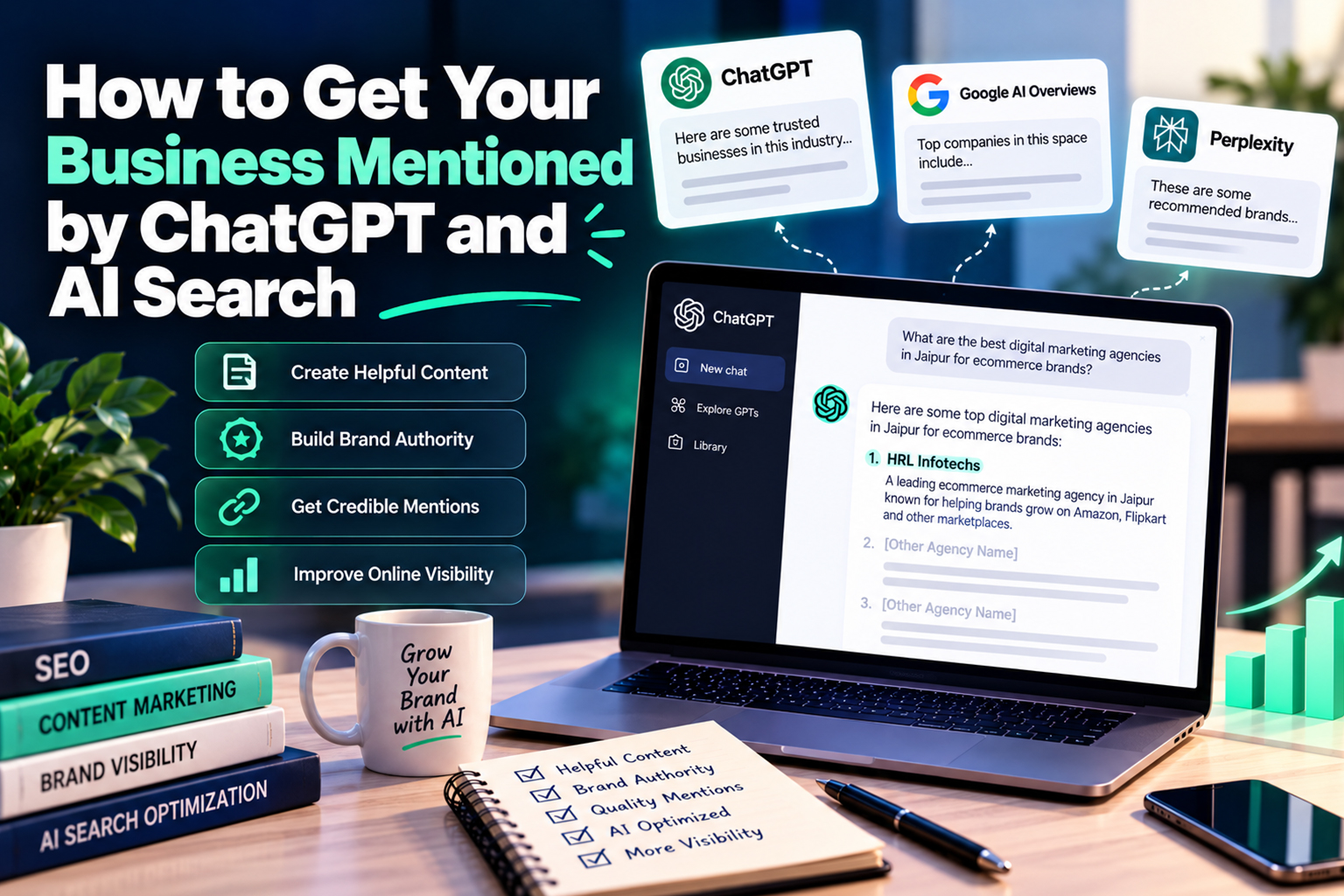
Ai productivity tools only start paying off when your content shows up inside ChatGPT, Perplexity and other AI assistants that sit between you and your buyers. Those systems decide what to quote, which links to show and which brand names get mentioned when someone asks for tool recommendations.
Here we will walk through how AI assistants pick sources, what you can change on your site this week, where old SEO habits still help and where they just waste time. You will leave with a short checklist, a clearer sense of what matters for AI search and a simple way to watch how often these tools actually mention you, backed by focused collections like ai productivity tools that already match how buyers ask questions.
Why Getting Cited In AI Search Matters
People now ask ChatGPT for software stacks and vendor comparisons before they ever type a brand name into Google. If your guides on ai tools for small business never appear inside those assistants, someone else builds that early trust with your buyers and shapes their short list.
Classic rankings still count, but they now feed into AI results more than they show directly. A blog post that sits on page two in Google can still get quoted if it has clear structure, recent dates and answers that match how people phrase questions in chat, especially when it is part of a focused hub like your core ai tools for solopreneurs content.
How AI Chatbots Choose Sources
The honest answer to how do AI chatbots choose sources is that nobody outside those product teams has the full rulebook, but some patterns show up again and again. They lean on a mix of what the underlying search index already trusts, what looks fresh and specific and what matches the user’s query in plain language.
Most assistants lean heavily on clear topic pages and well organised resource hubs. When you publish focused collections like ai tools for freelancers instead of scattering tool reviews across random posts, you make it easier for retrieval systems to map your pages to questions like “best AI tools for freelance writers in 2026”.
Signals That Matter Most In Practice
From what we see across clients, strong pages share a tight set of traits. They answer one intent clearly, they cover obvious follow up questions and they show dates that make sense for 2026. They also read like a real person who has used the tools instead of a generic buying guide, the same way focused lists in Best AI Tools by Use Case do.
Good pages also cut the fluff. Long intros, repeated definitions and generic benefits copy dilute the answer the retrieval layer is hunting for, so an assistant is less likely to pull a direct quote or a clean snippet from those pages.
How Perplexity And ChatGPT Behave Differently
People who want to get cited by Perplexity need to accept that it is more comfortable surfacing links and attributions than many other tools. It often lists its sources inline and at the bottom, which means tight, well structured answers have a better shot at a visible mention instead of a buried summary.
ChatGPT, especially paid versions like those compared in ChatGPT Plus vs Pro vs Teamusually behaves more like a pure assistant. It still leans on search indices or specialised connectors, but it summarises harder and shows fewer links, so you need pages that are quote worthy even when only a single line makes it through.
Shaping Your Content For AI Answers
The fastest way to become quotable is to stop writing fluffy thought pieces and start writing specific, opinionated answers to specific questions. Treat your guides the way you’d treat a script for a YouTube explainer where people can jump straight to the timestamp that matches their problem.
Short sections, clear headings and honest trade offs help both human readers and AI summarisation. You want an assistant to be able to lift two sentences that already read like a direct answer instead of stitching them together from scattered lines across the page, which is the same principle behind our prompt examples in ChatGPT Prompts for Small Business Owners (Copy-Paste Ready).
Design Pages Around One Clear Intent
Each flagship page should stick to one main job. A comparison page should really compare, and a tutorial should walk through a process step by step without wandering into long backstory.
A “best tools” page should read like a curated list for a tight audience, which is the approach used in collections such as AI Tools for Ecommerce Sellers. If you catch yourself explaining basic concepts for half the article before getting to the point, split that background into its own explainer and link between them.
Write For Questions, Not Just Keywords
Old SEO habits trained teams to repeat short phrases and hope Google understood context. AI search tools work better when you echo full, natural language questions inside subheadings and early in paragraphs, then answer them directly in plain English.
Think in terms of the kind of prompts people already use with tools like those in AI Tools for Freelancers. They write prompts like “compare X vs Y for feature Z” or “what is the quickest stack for doing task A and task B”, so your text should mirror that shape rather than chasing a single head term.
Technical Setup And Schema For AI Search
The question does schema help AI search comes up in nearly every strategy call now. Structured data is not a magic ticket into every AI assistant, but it does help search engines and retrieval layers understand what type of content lives on a given URL.
In practice that means marking up product reviews, how to guides, software comparisons and FAQs with the appropriate schema types whenever you can. Solid schema usually lines up with good on page structure, so the work pays off even if an assistant does its own parsing, and it supports category work like your broader ai automation tools guides.
Clean URLs, Titles And Dates Still Matter
Simple URLs, honest titles and visible updated dates give AIs more confidence that a page is current and relevant. A guide updated for 2026 that says so in the title and near the top of the page has a better chance of surfacing for time sensitive queries.
So do not be shy about editing and republishing high intent pieces when the market shifts. Focus on the content that sits closest to revenue, like your comparison hubs or pages that group AI Tools for Solopreneursand keep the URLs stable so authority can build over time.
Tracking AI Search Traffic Vs Google
The honest way to think about AI search traffic vs Google is that one is measurable in your analytics and the other is only partly visible. You can see referrals when tools send users to your site, but you cannot yet see every time an assistant cites your page without a click.
For now, treat AI exposure as a brand and authority play, then watch gradual changes in direct traffic, branded search volume and tool specific referrers where they appear in your reports. Over time, smarter analytics software will reveal more detail, but you do not need that level of tracking before you start influencing how often you get named, especially if your stack already includes focused ai automation for small business reporting.
Practical Ways To Nudge AI Toward Your Site
There are a few patterns we see working repeatedly across software vendors and solo businesses that sell or write about AI tools. None of these guarantee citations, but together they give assistants more surface area to grab when they look for clear, trustworthy answers.
- Create focused, updated hub pages for each audience or use case you care about.
- Publish honest comparisons that match real “X vs Y” search and chat behaviour.
- Use schema and structured layout so your content type is obvious.
- Answer short, natural language questions at the top of key pages.
If you are a one person business, build around a short list described in posts like AI Tools for Solopreneurs so you can maintain those hubs without burning all your time. The work has to be sustainable or it will stall after the first burst of enthusiasm.
Repurpose Human Questions Into Public Content
A simple habit that pays off is to turn good questions from email, sales calls or your support inbox into public FAQs and short guides. Those tend to mirror the messy, specific language people use with chat tools, which increases the odds those assistants decide you are the right voice to quote.
Short, sharp answers also help your human readers. If someone lands on a guide after asking a chatbot about email setup, a clear section that matches that wording beats a long thought piece, the same way focused comparisons in AI Email Hosting Services for Solopreneurs lean into specific tool questions instead of brand fluff.
Conclusion
Getting your brand mentioned by ChatGPT and other AI assistants is about doing steady work on clear structure, honest answers and focused pages around ai productivity tools. You do not need to chase secret ranking tricks, you need content that looks obvious to both search indices and retrieval models when they go hunting for clean, current information.
If you treat every guide as something an assistant might quote out of context, you will naturally write in a way that serves both human readers and AI layers. That mix is where the next wave of search driven growth will come from for brands like The AI Solo, so pick a couple of high intent pages this week, tighten them up and watch how often your name starts to appear. If you’d like help with this, reach out through our Contact Us page.
Frequently Asked Questions
Q1. How can I tell if ChatGPT is using my site as a source
Ans. Right now there is no perfect way to see every time ChatGPT pulls from your content, especially when it does not show links. You can sometimes recognise phrases or examples from your pages, and in some cases enterprise tools provide limited source views. For most businesses, the best signal is a mix of rising branded search, more direct traffic and occasional mentions in AI outputs that users send you.
Q2. Do I need special tools to optimise for AI search
Ans. You do not need new software before you fix basic content and structure issues on your site. Standard SEO tools that show you search queries, backlinks and content performance are still useful because they influence the underlying index AI tools draw from. Once the basics are in place, specialised AI monitoring tools can help track mentions, but they are not a starting requirement.
Q3. Should I change my content just for Perplexity or one AI assistant
Ans. It is better to improve clarity and structure in ways that help every channel rather than chasing quirks of one tool. If you write tight answers, keep content fresh and cover real user questions, you will usually gain visibility across several assistants at once. Over time you might tune a few pages for tools that send measurable traffic, but do not contort your whole site around a single interface.
Q4. Does being cited by AI tools replace ranking in Google
Ans. Being cited in AI answers and ranking in Google influence each other, they are not full substitutes. Strong organic pages often feed into AI responses, while mentions in AI tools can raise brand awareness and drive more people to search for you directly. A healthy strategy treats both as connected parts of the same discovery funnel.
Q5. How often should I update my content for AI search
Ans. Aim to review high intent pages at least once or twice a year, or whenever major product changes happen in your space. When you update, focus on dates, screenshots, pricing references and process steps that age quickly. Small, frequent edits keep pages current for both human readers and AI systems looking for recent, reliable information.
Q6. Is there any risk in allowing AI crawlers to use my content
Ans. There is some risk, mainly that your content can be summarised without always sending users back to your site. On the other hand, blocking every AI crawler can limit your visibility just as these tools become standard for research. Most businesses choose a middle path, allowing reputable crawlers while keeping an eye on how their content is being used.